
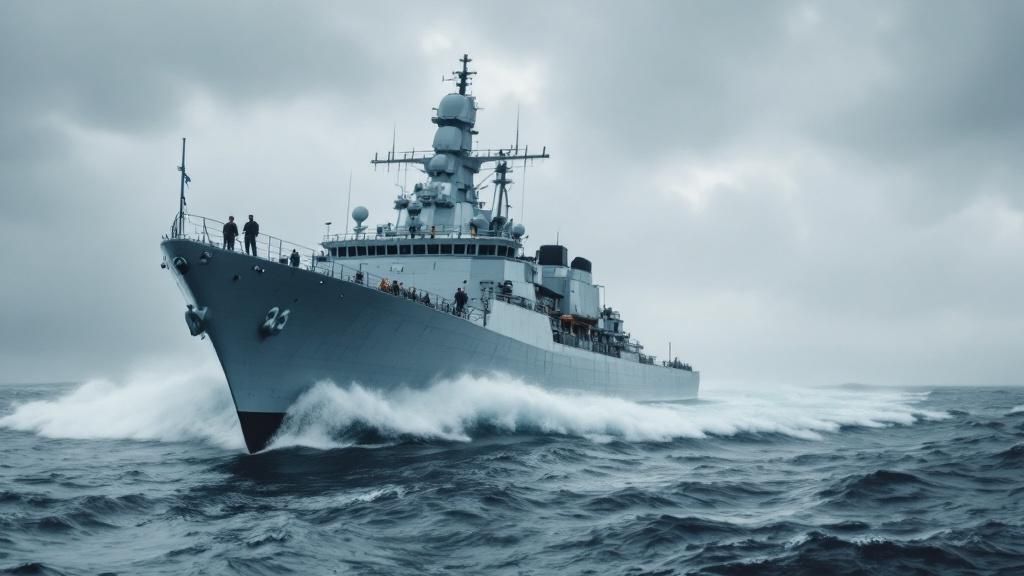
The Royal Navy is getting ready to intercept and seize Russian shadow fleet vessels active in UK waters, after Prime Minister Sir Keir Starmer approved armed intervention against the ships. Russia has been operating vessels without valid national flags to circumvent global trade restrictions and sustain financial support for its war in Ukraine. Ministers identified a legal basis in January under the Sanctions and Money Laundering Act 2018 that permits forces to stop and hold the sanctioned vessels. The government believes approximately 75 per cent of Russia’s crude oil is transported by ageing ships in the shadow fleet, with 544 vessels believed to be involved in the operation. Senior government officials have confirmed that specialist military units have finished preparation for the operation, with the first boarding anticipated to take place imminently.
The Covert Fleet Issue
Russia’s covert shipping network represents a complex system designed to evade sanctions that has enabled Moscow to continue exporting crude oil whilst bypassing international restrictions designed to starve its military apparatus of funding. These vessels, typically ageing tankers lacking valid national flags, have proven essential to Russia’s capacity to fund its military campaign in Ukraine. The government calculates that approximately 75 per cent of Russian crude oil is transported by these ships, highlighting the scale of the problem. With 544 vessels under sanctions identified as part of the shadow fleet, the challenge facing British forces is significant and requires careful coordination with partner countries.
The complexity of tackling the shadow fleet goes further than simple identification and interception. Royal Navy personnel have already supported neighbouring countries including Finland, Sweden and Estonia with surveillance and tracking operations in recent weeks, demonstrating the international scope of the threat. Ship-tracking technology allows military planners to identify sanctioned vessels several weeks ahead of they arrive in UK waters, providing sufficient time for operational planning. However, the prospect of boarding vessels with potentially armed crews requires specialised instruction and preparation. Senior military units, such as the Special Boat Service and Royal Marines, have conducted extensive wargaming exercises to ready themselves for various scenarios and levels of resistance they may encounter.
- Ageing tankers functioning without valid national flags bypass sanctions
- Government calculates 75 per cent of Russian oil relies on shadow shipping
- 544 sanctioned vessels identified as part of the initiative
- Ship-tracking systems identifies vessels weeks prior to UK waters arrival
Legal Framework and Strategic Development
The government’s ability to conduct military actions against sanctioned vessels rests upon a carefully constructed legal framework identified by government legal counsel in the early part of this year. The Sanctions and Money Laundering Act of 2018 has been determined to furnish the required legal means allowing the use of military power against vessels in UK waters that violate international sanctions regimes. This legislative framework enables the Royal Navy and connected military organisations to board and apprehend vessels without demanding further parliamentary consent for every single operation. The recognition of this legal grounding represents a major development, enabling ministers to proceed with enforcement operations that would previously have faced considerable legal obstacles.
Defence officials and military planners have been operating in partnership to identify which sanctioned vessels will become the primary objectives for boarding operations. Ship-tracking technology delivers essential information, enabling authorities to track the activity of flagged vessels and anticipate their entry in British waters with considerable accuracy. This advance warning allows operational teams to conduct detailed planning, working alongside intelligence agencies and ensuring that specialist units are positioned appropriately. The strategic approach prioritises methodical preparation rather than reactive responses, improving the chances of successful operations whilst reducing hazards to military personnel involved in the boarding procedures.
The Sanctions and Money Laundering Act
Government lawyers recognised the 2018 Sanctions and Money Laundering Act as the statutory mechanism permitting military boarding operations against sanctioned vessels in UK territorial waters. This Act grants the statutory authority necessary for armed forces to intercept and detain ships believed to be breaching international sanctions imposed upon Russia. The Act represents a previously untapped mechanism that allows for the implementation of sanctions regimes through military means rather than purely bureaucratic or diplomatic channels. Its use against the shadow fleet illustrates how existing legislation may be modified to tackle contemporary security threats and sanctions evasion tactics.
The establishment of this statutory foundation happened subsequent to extensive analysis by legal advisers examining current legislation and their applicability to shadow fleet operations. In the first half of this year, British defence forces aided American troops in capturing the Marinera oil tanker, which had reportedly delivered oil for Venezuela, Russia and Iran in breach of sanctions. This successful collaborative action prompted ministers to investigate how British forces could solely undertake equivalent interventions against vessels under sanctions. The regulatory structure now in place enables such operations to go ahead with appropriate state authorisation and international legitimacy.
Armed Forces Readiness and Instruction
Specialist military units have conducted intensive training exercises in recent weeks to prepare for boarding actions against vessels in the shadow fleet. These tactical simulations have centred on multiple scenarios, including encounters with armed crews and resistance from ship personnel. The training programme has been designed to equip personnel with the strategic understanding and practical skills required to carry out safe and effective boarding procedures in demanding maritime environments. Senior defence representatives have confirmed that this thorough preparation stage is now concluded, opening the door for operational missions. The emphasis of these drills has progressed past standard boarding methods to incorporate communication approaches, medical intervention procedures, and contingency measures for handling unexpected resistance or hazardous conditions aboard the target ships.
The choice of units involved in shadow fleet operations will be determined by the expected level of opposition expected from crews aboard separate vessels. Military planners are employing intelligence reports and vessel-specific information to establish the proper force composition for each operation. The Special Boat Service, renowned for maritime specialist operations, and the Royal Marines, skilled in amphibious and boarding procedures, are both anticipated to participate in these missions. The adaptable approach to troop deployment ensures that operations remain commensurate with assessed threats whilst preserving operational effectiveness. Government figures are eager to emphasise that personnel participating have received thorough preparation and possess the expertise required to conduct these operations in a safe and professional manner.
| Unit | Primary Role |
|---|---|
| Special Boat Service | Maritime specialist boarding operations |
| Royal Marines | Amphibious and boarding procedures |
| Royal Navy Personnel | Vessel monitoring and tracking support |
| Ministry of Defence Officials | Operational planning and coordination |
- Exercise modules include responses to crew armed resistance and dangerous maritime conditions.
- Unit positioning guided by threat evaluations of individual vessel threat levels.
- Personnel possess expertise in professional and safe execution of boarding procedures.
Cross-Border Collaboration and Broader Context
The British administration’s choice to apprehend shadow fleet vessels represents a significant escalation in efforts to enforce global trade restrictions against Russia’s petroleum commerce. Royal Navy staff have already provided crucial assistance with neighbouring Nordic nations, including Finland, Sweden and Estonia, in monitoring and tracking questionable ships operating across the North Sea and Baltic regions. This collaborative approach underscores the mutual dedication amongst northern European allies to disrupt Russia’s capacity to bypass sanctions enacted after its invasion of Ukraine, demonstrating that shadow fleet interception is not merely a British priority but a shared defence priority.
Prime Minister Sir Keir Starmer’s timing in approving military action aligns with his participation in the Joint Expeditionary Force summit in Helsinki, demonstrating the government’s determination to keep attention on the Russian threat despite recent geopolitical developments in the Middle East. Ministers have emphasised that disrupting Russia’s shadow fleet operations will substantially reduce funding for what Starmer termed “Putin’s war machine” and its “barbaric campaign” in Ukraine. The official assessment that approximately 75 per cent of Russian crude oil travels via ageing shadow fleet vessels demonstrates the crucial significance of these enforcement actions to the wider sanctions framework.
The Joint Expeditionary Force Initiative
The Joint Expeditionary Force consisting of military coalitions of northern European nations, delivers the institutional framework for coordinated action against shadow fleet operations. Starmer’s address to the JEF summit on Thursday is expected to highlight Britain’s commitment to this multilateral approach whilst demonstrating the tangible steps being taken to apply sanctions regimes. The coalition’s collective naval capabilities and information exchange systems enhance the effectiveness of locating and apprehending sanctioned vessels, guaranteeing that Russia is unable to exploit gaps in monitoring coverage across waters across Europe.
Political Weight and Opposition
The government’s commitment to launching naval interdiction operations marks a considerable step-up in Britain’s approach to addressing Russian sanctions evasion, marking the initial instance UK forces will directly interdict vessels in domestic waters. The move holds substantial weight, demonstrating the Prime Minister’s determination to sustain pressure on Moscow despite rival international crises calling for ministerial attention. By approving these operations, the government signals to allies and adversaries alike that Britain continues committed to maintaining the international sanctions regime, strengthening its standing as a prominent voice in leading Western actions against Russian actions in Ukraine.
However, the authorisation of military boarding operations has not been free from examination. Analysis by BBC Verify raised questions about the efficacy of existing legal mechanisms, noting that numerous sanctioned ships had navigated the English Channel in the weeks after the designation of the Sanctions and Money Laundering Act as the statutory foundation for intervention. Critics have questioned whether the government’s strategy adequately addresses the extent of shadow fleet activity, with some suggesting that more robust international coordination and tougher enforcement measures may be necessary to meaningfully disrupt Russia’s oil trade and deprive its military operations of essential income.
